Covering Hurricanes: Before, During and After the Storm
Lessons from a newsroom that anticipates disaster every summer.
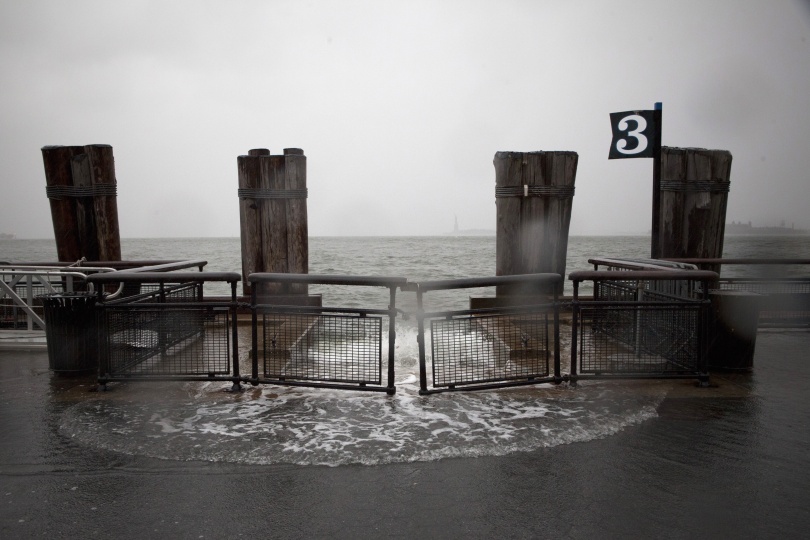
Rising waters break the banks at Battery Park as Hurricane Sandy makes its approach in New York
Click here for resources for covering natural disasters.
Although hurricanes can be devastating to people and property, inflicting damage that can take years to repair, they do possess a big advantage over catastrophes such as earthquakes, terrorist attacks and tsunamis: Journalists and ordinary citizens can prepare for them.
I’m writing from New Orleans, where hurricanes are an accepted, if traumatic, part of the summer.
During this time of the year, I start my day by going to the National Weather Service’s National Hurricane Center site to see what might be coming our way.
If something looks likely to strike in your coverage area, here are things to do before, during and after the storm hits.
BEFORE
- Get contact information, including email addresses and cellphone numbers, for disaster agencies and their representatives. Do this before the storm is closing in, when these people will have time to talk with you and, if you’re lucky, establish a rapport. As my wife, Tulane University’s former public relations director, is fond of saying, a disaster is no time to make new friends.
- Keep your cellphone and laptop charged. You never know when power will fail.
- Fill your gas tank.
- Withdraw a few hundred dollars from your ATM. If you’re sent where a storm has hit, credit card machines probably won’t be working there.
- Get supplies, including a flashlight, batteries, waders, bottled water, granola bars and tissue.
- If you’re part of a news organization, set up a safe room, away from windows, and stock it with lights, fans, computers and, most importantly, generators to power this equipment when the power fails. When Katrina and Gustav hit, we at The Times-Picayune used our photo studio.
- Keep track of the storm’s path. The National Hurricane Center’s site is good; so is Weather Underground.
DURING
- Get to a safe place and stay there until the danger passes. We’ve all seen TV reporters struggle to keep standing as the wind and rain buffet them while they’re delivering their reports. Don’t do that. Your safety is more important than a glory moment.
- Blog whatever you get whenever you can, once you make sure it’s accurate. This is the beauty of blogs: You don’t have to wait for a complete story, and you’re relaying information people want to know.
- If officials will let you, embed yourself with them at a disaster center. You’ll be in a safe place, you’ll get the latest news and, when the storm is over, you’ll probably be able to ride with them in their big, safe, high-off-the-ground vehicles to inspect and report on damage
AFTER
- Keep calling those people you befriended before the storm to get information on damage and casualties, as well as information such as road and school closings and event postponements. Although some of this information may sound mundane, it’s what readers and viewers need to know. If nothing else, it shows them that signs of normal life are returning.
- Translate government- and science-speak into lay English. Don’t be afraid to ask officials what they mean. If you can’t understand it, your readers and viewers certainly won’t.
- By all means, interview people who have been through the storm because you want the human perspective, but use your gut in determining whether these folks are ready to talk. When you do these interviews, you have to walk a tightrope: You can’t be stiff and formal — that’s a turn-off — and you can’t be so empathetic that you’re a basket case.
- Look for sidebars, which should be all around you. If you’re struggling for ideas, think of what you would want to know. After Katrina, for instance, I realized that my wife’s and my records from our eye doctor probably were in Lake Pontchartrain, because her office flooded. That provided an opportunity to write about what people in this situation could do to rebuild their medical histories, and it let me talk about the value of electronic medical records. When we couldn’t find our doctors because they had evacuated, I tracked down and listed websites where physicians could report their whereabouts and when they expected to return.
THROUGHOUT
Covering a disaster in your community is likely to make you a better, tougher reporter. It’s the home front. You’ll want to know information that you can pass to your audience that will also help you in the recovery phase. We learned that after Hurricane Katrina, and I think it made us press officials harder for answers.