Covering Trauma in Latin America
Journalists and trauma experts from throughout the Americas discuss how to meet the special challenges faced in reporting violence and remaining resilient.
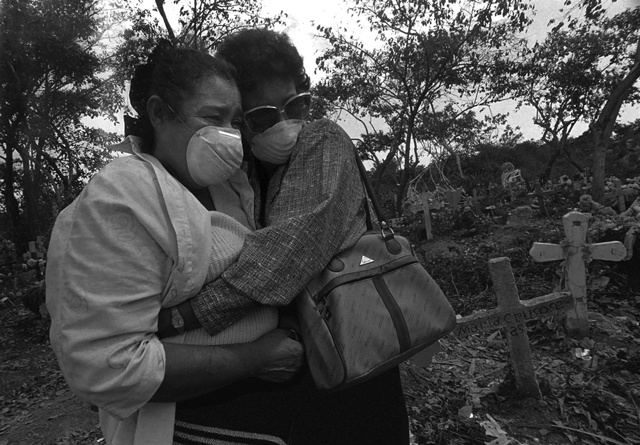
On Oct. 13-14, 2009, in Columbia Journalism School’s World Room, a group of 20 distinguished journalists gathered for a two-day workshop on covering violence and its aftermath in Latin America. (Download or listen to audio of the opening plenary.)
Sponsored by the John S. and James L. Knight Foundation and co-hosted by the Dart Center and the Maria Moors Cabot Prize, the workshop was the first to bring Latin American journalists together to discuss the special challenges of covering atrocity and tragedy in the region. Experts in psychological trauma from across the Americas (see their bios) described the current science on the significance and effects of reporting on violence and catastrophe, as well as techniques for resilience. Reporters, editors and photojournalists from across Latin America (see their bios) shared their own experiences bearing witness in situations of threat; and the entire group broke into working groups to identify concrete "next steps" that could be taken to support journalists throughout the region (read their conclusions).
Much of the two days of proceedings was off the record to encourage a frank exchange of experiences and ideas. But three open and on-the-record panels of journalists and academics from all over the Americas, conducted in English and in Spanish, focused on the latest knowledge and the practical challenges related to journalism about trauma. The descriptions and audio of these sessions in the following sections provide information for those seeking to improve coverage of violence both throughout Latin America and elsewhere.
As the dean of the Columbia Journalism School, Nicholas Lemann, said in his opening remarks: "Our goal would be that courage would not be necessary, one day, in practicing good journalism in the Americas. But that's not going to happen tomorrow, so here is an institution to help with the struggle to get there."
Download or listen to opening remarks from Nicholas Lemann, dean of the Columbia University Graduate School of Journalism; Josh Friedman, director of the Maria Moors Cabot Prize; and Bruce Shapiro, executive director of the Dart Center for Journalism & Trauma: