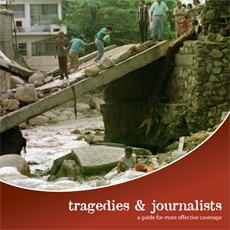
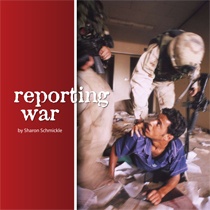
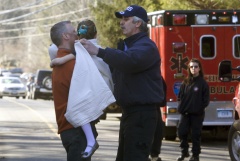
Seminar: Victims and the Media
Readings, assignments and a detailed schedule for Mass Communication 4433/15199, Victims and the Media Seminar at the University of Central Oklahoma.
Course Description
Victims and the media is an intensive study of the interpersonal and psychological effects of trauma on journalists and the people they interview. Special interest is given to identifying the symptoms of post-traumatic-stress-disorder and its impact upon journalists and victims of disasters and other horrific events. The course analyzes the cultural production of violent images in print, broadcast, photographic and entertainment media.
Required Texts
- Course Packet of readings available in the UCO Copy Center in the basement of the University Center.
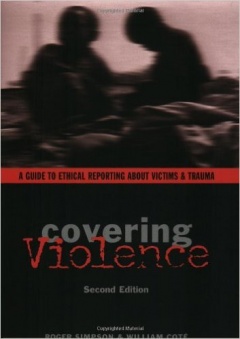
- Simpson, R. and Cote, W. (2006). Covering violence: A Guide to Ethical Reporting About Victims and Trauma. (2nd Ed.). New York: Columbia University Press.
- Glassner, B. (1999). The Culture of Fear: Why Americans are Afraid of the Wrong Things. New York: Basic Books (1999).
- E. Buchanan (1991). The Corpse had a Familiar Face: Covering Miami, America’s Hottest Beat. New York: Simon & Schuster.
- Sontag, S. (2003). Regarding the Pain of Others. Farrar and Strauss & Giroux.
- Sontag S. (1977). On Photography. Picador Press (Reprinted in 2001).
- Body Horror: Photojournalism, Catastrophe and War by John Taylor. New York University Press (1998). Recommended. Out of print but helpful if you can find online.
- Virgin or Vamp: How the Press Covers Sex Crimes by Ruth Benedict. New York: Oxford University Press (1992).
Websites
Victims and the Media Program at Michigan State University, Department of Journalism.
Dart Center for Journalism and Trauma at the Columbia University Graduate School of Journalism.
Center for People and the Media at the University of Central Oklahoma, Department of Mass Communication.
Frank Ochberg, M.D. Articles on P.T.S.D. (See, for instance, Gift from Within.)
Course Objectives
- Knowing how to interact and interview victims of traumatic events in the role of a media professional.
- Explaining the concept of Post Traumatic Stress Disorder (P.T.S.D.) and its application to victims of horrific violence; including those people that work in the media industries of print and broadcast journalism.
- Employing concepts from the course to analyze past and present victim representations including televisual, photographic and print news coverage of war, school shootings, murder, natural disasters and other examples involving emotional and physical injury or trauma.
- Constructing independent re-search that further contributes to the knowledge base of victims and the media theory and practice.
- Examining the cultural side effects of the over-saturation of violent images in a global twenty-four-hour news cycle world.
- Evaluating the ethics of images of trauma in photojournalistic representation in tabloid and broadsheet newspapers including live television newscasts.
Course Requirements
1. Topical Papers
The student will complete two topical papers on a selected issue from the required texts for the course. The topical papers will be 3-5 pages in length, double-spaced using 12-point font. Three additional academic research sources are required for these topical papers. The topics from which these papers will be written are: Glassner (1999), Simpson and Cote’ (2006), Sontag (2003) and (2001), and Benedict (1992). Simpson and Cote’ (2006) will be read and used for developing a conceptual framework for analyzing the cultural practices of reporting, interviewing and representing victims. One of the three topical papers will be further developed into your final 10 page research paper. An acceptable style manual such as APA or MLA is a requirement for the topical papers. Documentary films and other analytical media (not movies) shown in the class or that you have critically viewed may be used as a source. Wikipedia is not an acceptable secondary source.
2. Research Paper Requirements
The student will complete a 10-page paper, which further develops one of the topical papers of their choosing. This research paper will be the culminating project in the course. The paper must have a minimum of 7 academic/primary sources. Your research should make some significant contribution to the victims and the media course of study.
3. General Requirements for Topical and Research Papers
- A title is required.
- The student must use MLA or APA style manual for research papers in the course.
- Papers should be carefully proofed for spelling and grammatical errors before
- handing in to the instructor for grading.
- A bibliography of all work read and cited must be included in the paper. If you use analytical media such as documentary films they must also be cited according to the appropriate style format.
- Plagiarized papers will receive a grade of 0.
- All papers and assignments must be completed in order to pass the course.
- Internal citations in the text must be used or this will error will constitute a plagiarized paper.
- All internet sources must be refereed publications from a respectable academic journal.
- A grading sheet will be used to judge the value of student research in the course.
4. Reaction Paper Assignment
Ms. Edna Buchanan was the first woman to work as a crime beat reporter at the Miama Herald for over 20 years. Her autobiographical book: The Corpse Had a Familiar Face is often cited for the light it sheds upon victims of crime and natural disaster. You will write a three to five page reaction paper to Buchanan’s book reflecting upon what insights she makes on covering victims on the newsbeat.
5. Paper Topics
The papers written for the course can be theoretical or applied analyses. For instance, a theoretical paper might look at how the media creates fear such as in Glassner’s book The Culture of Fear. Another topic such as from Sontag (2003) concerns the oversaturation of horrific images in a 24 hour news cycle culture which has left us with the inability to feel empathy for others. Your arguments should contain theoretical premises and examples backed up with theory. An applied study might critique the devastating effects of Hurricane Katrina and the people it affected and traumatized using Cote and Simpson’s stages of a disaster, post-traumatic effects and a critique of the photographs of the victims of Katrina. Another applied type study might concern how the media caused a feeding frenzy after Columbine in the inept efforts to explain this event. (See my article on Hate Crime Reporting in your course packet for an example of an applied study of the Matthew Shepard hate crime and the media.)
Publication Opportunities
Several Victims and the Media students have published their research projects in the course. The Western Journal of Social Science is a campus based, refereed, scholarly journal, especially designed for undergraduate students. The New Plains Review housed in the Dept. of English solicits scholarly manuscripts for publication. Student funded research projects may be available through the Office of Graduate Studies. A proposed book of exemplary undergraduate research from this class may be under consideration providing there is quality research papers generated from the course.
Attendance Policy
Since this is a seminar class that entails working together to have high quality discussion, attendance is required. The instructor will allow three excused absences during the semester. After three, your final grade will be dropped one letter. Two more will constitute another one letter grade drop. Six absences will be considered a failure to participate in the seminar warranting a grade of “F”. Students should complete all reading assignments and be on time for class.
Awards
A top ranked paper will be selected for a cash award in the fall for The Joe Hight Fellowship award. Conference travel money is available for students interested in presenting at an academic conference.
Instructional Process or Delivery
The subject matter of this course will be taught in a student-centered discussion format equivalent to an upper-level (4000-5000) undergraduate or graduate seminar. It is imperative that the student is on time and is completing the required readings. Moreover, you will be expected to engage in critical discussion, analysis, and application of the readings, films, and other materials presented in the class. Group presentation of selected chapters is required.
Late Assignments
Students will have ample time to complete their topical research projects and research paper. One half letter grade will be taken off for each day an assignment is late. If a student misses their group presentation one letter grade will be taken from their final course grade.
Grading Procedure
The two required topical research papers are worth 20% each of your course grade.
A reaction paper of 3-5 pages of what you learned about reporting about victims from the Edna Buchanan book, The Corpse Had a Familiar Face (1991) is required. This paper will be worth 20% of the final course grade.
The final research project is worth 40% of your course grade.
Attendance, including being on time for class, and participating in all of the assignments such as watching the videos, hearing your classmates and professor present and discuss ideas is expected.
Anyone who publishes his or her research paper in the class will automatically receive a grade of “A”.
Plagiarism: Plagiarism or adopting others work as your own will not be tolerated in this course. The student will immediately fail the assignment, possibly risk failing the course, and be reported to the Dean of Student Affairs.
You must learn how to cite research using the APA or MLA Style manual. These research writing guides are available in Chambers Library and on-line.
100-90=A
89-80=B
79-70=C
69-60=D
59 or below=F
Class Decorum
Class time is taken seriously for learning a difficult terrain of new material. It is expected that all cell phones remain off in the course. That means no text messaging during class. Polite behavior by all is conducive to a civil and dynamic classroom. Please refrain from side conversations during the films and class discussion.
Tentative Course Schedule
1. The Media and the Creation of Fear
Week One: Reading: Culture of Fear (1999). Cote and Simpson will assign particular chapters. Discussion groups over Glassner assigned.
Week Two: Video: Bowling for Columbine (2001) by Michael Moore.
Week Three: Critical viewing: Violence an American Tradition (1995). How has American journalistic culture made hero’s out of violent people?
2. What the Journalist Will Encounter
Week Four: Paper I Due. Discuss results of paper. Read: The Corpse Had a Familiar Face (1991). Discussion groups over selected Buchanan cases. Read Simpson and Cote’ (2006) on journalist as victim and approaching victims of violence.
Week Five: What does it mean to report on and to encounter victims?
Week Six: What does it mean to be a victim? Tips for Interviewing Victims. Role Playing of Victims Interviews. Read Interviewing Victims in Cote and Simpson video by Dr. Frank Ochberg on Post Traumatic Stress Disorder and victims of violence. Guest Speaker: Mr. Mark Brenneman. Reaction Paper Due.
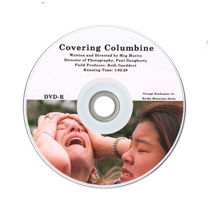
Week Seven: Video Covering Columbine. Discuss how the media reported and interviewed Columbine high school students. Read Simpson ad Cote’ (2006) on Columbine.
Week Eight: Covering Hate Crimes. Assigned Readings.
Week Nine: Read: Virgin or Vamp: How the Press Covers Sex Crimes. Discussion groups assigned over each of the cases.
Week Ten: Spring Break March 20-23
Week Eleven : Read article by Catherine McKinney on incest survivors in Cote and Simpson. Topical Paper II Due.
3. Photography and Victim Representation
Week Twelve: Read Sontag On Photography (1977). Discuss
Week Thirteen: Read Sontag Regarding the Pain of Others (2003).
Week Fourteen: Analysis of Images of War and other horrific events
Week Fifteen: Final expanded 10 page research paper due the week before finals week.
Week Sixteen: Finish course
Note: Topics may take longer than expected to complete. Times, dates, and topics on the syllabus are subject to change. All required writing assignments must be completed in order to pass the course.
You must complete all writing assignments to pass the course. The papers are spaced apart with ample time for the student to conduct his/her research contributions.