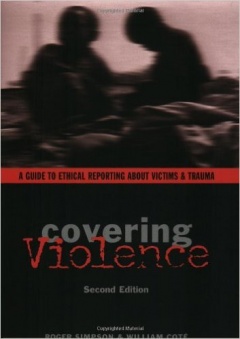
Covering Violence
The essential text for journalists seeking to report sensitively and responsibly on traumatic events, interweaving practical guidance with real-world examples.
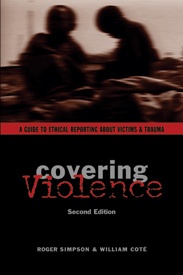
A Guide to Ethical Reporting About Victims & Trauma
"We had been newspaper reporters and had covered a wide range of news events, but we matured as journalists without knowing much about what the victims in our stories truly experienced,” Roger Simpson and William Coté write in the preface to the second edition of Covering Violence: A Guide to Ethical Reporting About Victims & Trauma: a comprehensive guide to how to cover violence, report on victims with respect, and recognize the effects of emotional injury on both journalists and those they cover.
This new edition reflects on the events that have commanded media attention in recent years, the Columbine High School shootings, the 2005 tsunami, Gulf hurricanes, 9-11, and the Iraq war while keeping a sharp focus on the forms of violence that journalists in any community must face regularly—interpersonal cruelty, traffic deaths and injuries, and natural disasters.
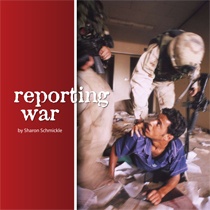
The book includes special profiles of nine journalists and examples of their reporting or photography. The profiles, written by Migael Scherer, a Seattle educator, and John Harris, a journalism professor at Western Washington University, include Sonia Nazario, a Pulitzer-winning reporter for the Los Angeles Times; Fletcher Johnson, photographer for ABC News; Jane Hansen, an Atlanta Journal-Constitution reporter specializing in children’s issues; Marley Shebala, reporter for the Navajo Times; Anh Do, a journalist with the Orange County Register; Sharon Schmickle, who reported from Iraq for the Minneapolis Star-Tribune; New York Daily News photographer David Handschuh; Debra McKinney, a social-concerns reporter for the Anchorage Daily News, and Scott North, a courts reporter for The Herald in Everett, Washington.
The book presents innovative ways of interviewing and photographing survivors of violence and helps journalists understand the effects of frequent exposure to traumatic events on their own lives. The authors relate journalistic practices to the rapidly expanding body of literature on trauma, and draw on the insights of clinical experts.
A new chapter of Guidelines for Journalists Who Cover Violence and suggestions for training news staffs or journalism students give the book value in newsrooms and college classrooms.
“Since 9-11,” write Simpson and Coté, we have witnessed a renewed commitment to sensitive, insightful reporting about trauma. We want to see more news that conveys in ethical words and images the experience of people who suffer harm. We have been moved to write these chapters because so many journalists we know express the same hope.”