An Injury, Not A Disorder
Post-Traumatic Stress Disorder has been an accepted diagnosis since 1980. It's time for clinicians to adopt a new name - Post-Traumatic Stress Injury - that is more accurate, hopeful and honorable.
Post-Traumatic Stress Disorder – PTSD – has been an accepted diagnosis since 1980. And that's a good thing. So why is it now making controversial headlines? Why are some clinicians like myself – along with a wide range of veterans’ advocates, women’s groups and others – arguing for changing the name of the diagnosis, PTSD, to PTSI – for Post-traumatic Stress Injury?
In large part this argument has been inspired by retired General Peter Chiarelli, the former Vice Chief of Staff of the U.S. Army. After two tours in Iraq, Gen. Chiarellii grew alarmed by rising suicide rates in the Army. He reviewed every case, and came to the conclusion that many service men and women hate the term “disorder,” and suffer in silence rather than endure that label. "For a soldier who sees the kinds of things soldiers see and experience on the battlefield today, to tell them what they're experiencing is a disorder does a tremendous disservice,” he has said. “It's not a disorder. It's an injury."
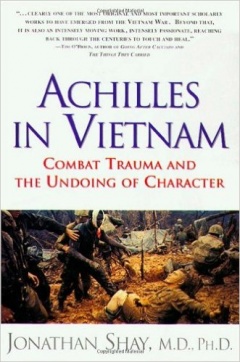
Jonathan Shay, MD, PhD – whose pioneering studies of veterans earned him a Macarthur Fellowship – and I agreed with Gen. Chiarelli. We wrote to the American Psychiatric Association President, John Oldham, MD, on April 7, 2012, proposing that the new edition of the Diagnostic and Statistical Manual, currently under review, adopt the PTSI name. We wrote that there is a crisis of suicide, stigma, and misunderstanding affecting young veterans. Anything that helps them seek help is worth consideration. We then argued that the name affects civilian survivors of trauma as well – crime victims, women who are raped and battered, and others who develop the syndrome. Finally, we explained how the injury model applies to the history, theory and treatment of this condition.
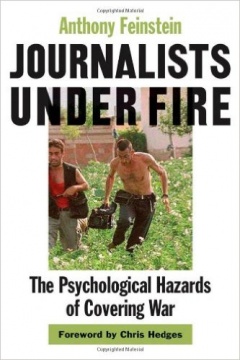
(That includes journalists who cover war and have high rates of PTSD. We believe journalists, too, are injured on the job and are more like the physically wounded than the chronically mentally ill.)
Since April, this new language has received endorsements of this proposal from a wide spectrum of individuals, some of whom speak for veterans groups, some for women’s issues, and others who represent organizations that advocate for the needs of traumatized populations.
Women who survive rape, incest and battering plead with the APA for recognition of their dignity. They ask the APA to keep the basic concept behind Post-Traumatic Stress Disorder intact, but to improve the name to a phrase that they find more accurate, hopeful and honorable.
Many endorsers are men and women who have received a PTSD diagnosis, who are grateful for the help they have received, but who ask the APA, on their behalf, to re-name the condition an injury. They tell us that they will feel less stigmatized. But they also explain how the concept of an injury, rather than a disorder, does justice to their experience. Once they were whole. Then they were shattered. When their counselors, employers, friends and loved ones behaved as though they were survivors of injuries, with lingering wounds, they could heal. When they felt like mental patients and were treated as persons with pre-existing weakness, they could not heal.
Among those who share this concern are longtime leaders in understanding the impact of violence – including a previous director of National Institutes of Mental Health, Bertram S Brown, MD, MPH; the founding president of the International Society for Traumatic Stress Studies, Charles Figley, PhD; leading feminists such as Gloria Steinem; several authors of books documenting their traumatic struggles, and military and VA mental health professionals.
Jonathan Shay and I shared these letters of endorsement with the APA. We hope those who have the power to name psychiatric syndromes will eventually be persuaded, whether or not the change is adopted for this version of the DSM.
To date, we have heard the following arguments against a name change from members of the DSM-5 committee:
- A name change will make no difference;
- There are far more important ways to combat stigma;
- Disorder is a term in the DSM and it is clearly defined in ways that apply to the reality of PTSD;
- The U.S. Department of Defense can use any name it likes – the Canadian military, for instance, refer to Operational Stress Injury. The DOD, not the APA, should change names;
- The Purple Heart will confer honor and recognize psychological injury. Let’s work on that for PTSD received under eligible conditions;
- PTSD has genetic elements and changing the name could reduce emphasis on biological etiology and biological remedy.
In response to the six arguments we hear from the DSM-5 committee members, we offer these observations:
- A name change will make a difference to the hundred-plus people whose letters have been submitted to the APA and to the thousands they have heard from directly on the issue. People who are labeled "disordered" tell us why being labeled PTSI would improve their lives. This is evidence that should be acknowledged, whether or not it means that more will come forward to seek treatment.
- Certainly there may be other important ways to combat stigma. Let’s work on all of those. Let’s also realize that an APA name change will signal something very positive to those who look to us for leadership. It will mean, "We take this seriously. We listen to our patients. We join the movement to speak with respect about those who have invisible wounds."
- The APA, in the DSM, has defined disorder in ways that apply to PTSD. We agree. But PTSI is at least equally applicable as a label. We have diagnoses in the DSM that use names other than disorder. Because "disorder" seems innocuous to those who write the DSM, we should not deny evidence that the term is degrading to so many who carry the label.
- Canada's military and veterans agencies did change the titles of their clinics to "Operational Stress Injury" services and they did find that a successful move. Take that as evidence that names and titles do matter. Instead of simply saying “let DOD change” (a change that would do nothing for traumatized civilians), use the Canadian experience of beneficial name change to move us forward, not to hold us back.
- The Purple Heart will confer honor, and when the APA changes PTSD to PTSI, the fight for the Purple Heart will be far easier to win. We base this conclusion on soundings we have taken in the US and Canada. Canada does have a Sacrifice Medal for PTSD, stemming from military service under carefully defined circumstances. But the Pentagon needs more ammunition to change the rules for a Purple Heart. Leaders have told us that PTSI will be critical.
- Biological psychiatrists have no reason to fear that a name change to PTSI will inhibit research on genetic factors. There are constitutional factors at play in determining who becomes injured after exposure to traumatic events, and who has difficulty recovering. There is biological vulnerability and biological resilience. The scientific community will have just as much impetus to conduct research and treatment studies on ways to prevent and ameliorate the injury after PTSD is renamed PTSI.
There is another concern we must address. Some actually believe that we who advocate a name change are motivated by a desire to reduce benefits because we are associated with the military or the government. This is a red herring. Changing the name to injury is motivated by a conviction that there are many who deserve help, including benefits, and they closet themselves due to stigma and fear. The APA will change the elements of the diagnosis as outlined in DSM-5 drafts. These changes are of far more consequence than a name change to third-party payers who may seek an excuse to limit resources.
Indeed, if the APA changes the name to PTSI, all of us must make it clear that we are doing this because our patients, our potential patients, and their advocates have convinced us that this is accurate and honorable and hopeful. But we are NOT suggesting that the consequences of traumatic stress are any less significant, painful, and capable of creating disability. In fact, we believe a name change will help protect benefits by securing broader public awareness and support for those who suffer from the signature psychological injury of war, violence and human cruelty.
In sum, PTSI is a better term than PTSD. It is accurate. It does justice to the condition. It is preferred by those who contend with the condition. The APA would bring credit to itself and respect to its patients by adopting this improvement in diagnostic terminology.