In Bangladesh, Digging the Heart
The first workshop of its kind probes coverage of traumatic events in Bangladesh, from its 1971 war of liberation to today.
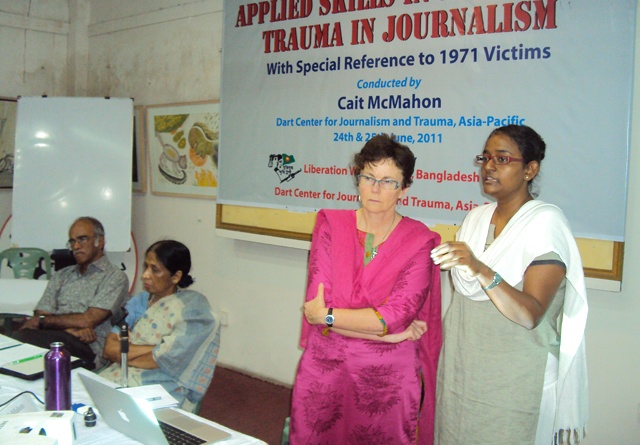
“Alas, who wants to dig the heart and re-awaken the pain.” With this quote from the Bengali poet Jibanananda Das, a training workshop began in Dhaka, Bangladesh on trauma reporting, with a special focus on the war crimes committed in the 1971 war that led to creation of the nation of Bangladesh. Trials have commenced these atrocities, some 40 years after they took place. Estimates of those murdered, raped and displaced during the war each range from the hundreds of thousands to millions.
The workshop, a collaboration between the Liberation War Museum of Bangladesh and Dart Centre Asia Pacific, included both early career and experienced journalists. There was a special focus on reporting on victims and survivors of the 1971 war of liberation, but the workshop also covered the reporting of traumatic events in Bangladeshi society today, including domestic violence, house fires, buildings collapses and corporal punishment of children.
"Trauma" is not a word that exists in Bangla. But lessons in the workshop helped participants to understand its meaning. Local psychiatrist and trauma expert Dr. Shahida Choudhury assisted in the process of "unpacking" the Western concept of trauma and how it relates to Bangladeshi society. Self care and peer support were encouraged as means of dealing with its effects.
On the second day of the workshop, experienced journalists shared pragmatic suggestions on how they improved their own skills at trauma reporting. These techniques and strategies were then applied to very specific questions about reporting on survivors of sexual violence from 1971 and the role of justice and human rights.
How does Bangladeshi society, in the words of Mr. Mofidul Hoque, a trustee of the Liberation War Museum, “dig the past and bring back the sufferings and pains to understand and heal the wound? How to learn from the past and ensure justice to work in building a better future?”
The workshop was the first of its kind for journalists in Bangladesh. It represents a contribution to assisting ethical and accurate coverage of the war crimes committed in 1971, and a step towards that better future.